
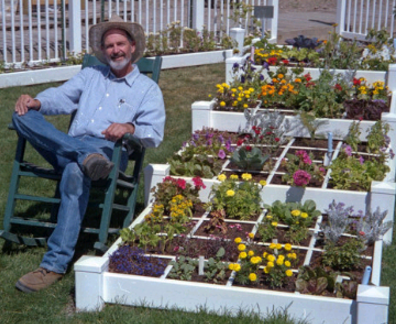
What is square foot gardening? A simple, unique and versatile system that adapts to all levels of experience, physical ability, and geographical location. Grow all you want and need in only 20% of the space of a conventional row garden. Save time, water, work and money! I am following the square foot gardening method, and I'll be using it as a reference through out the blog. Square foot gardening invented by the genius Mel Bartholomew! Learn more about it in his website , Or order his very very valuable book. It may come in downloadable PDF files too, if you search. 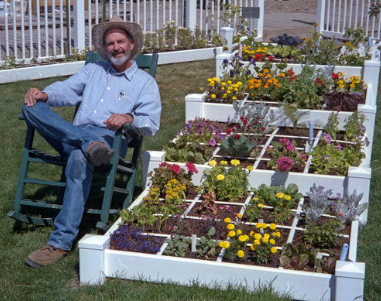
Here are the 10 things that make SFG different from traditional row gardening:
- Layout. Arrange your garden in squares, not rows. Lay it out in 4′x4′ planting areas. Companion plants can help each other grow bigger and tastier!
- Boxes. Build boxes to hold a new soil mix above ground. Your existing soil doesn't matter! forget about it, and just worry about the new soil called Mel's Mix.
- Aisles. Space boxes 3′ apart to form walking aisles. It makes it easier to walk and sit around the boxes, especially when your plants get really big and spill out of the boxes a little.
- Soil. Fill boxes with Mel’s special soil mix: 1/3 blended compost (please please make your own! The compost sold in Kuwait is a little shady) , 1/3 peat moss, and 1/3 coarse vermiculite (All available in True Value).
- Grid. Make a permanent square foot grid for the top of each box. A MUST!
- Care. NEVER WALK ON YOUR GROWING SOIL. This is how the soil stays so fluffy and airy for the roots stay happy. Tend your garden from the aisles.
- Select. Plant a different flower, vegetable, or herb crop in each square foot, using 1, 4, 9, or 16 plants per square foot. You might, for example, plant a single tomato in a square, but you’d plant 16 carrots in another. Using this system, you can cram a lot of garden into a small space and still get excellent yields.
- Plant. Conserve seeds. Plant only a pinch (2 or 3 seeds) per hole. Place transplants in a slight saucer-shaped depression. This means you wont waste seeds! The traditional way is to plant lots of seeds then cut off the majority and leave the strongest.
- Water. Water by hand from a bucket of sun-warmed water.
- Harvest. When you finish harvesting a square foot, add only compost and replant it with a new and different crop.
 I decided how big of an area I want to use, I am placing my SFG on the roof of my house, which I made sure received at least 8 hours of full sun. I am going big and starting with lots of boxes. So after thorough planning I decided I want two 4x4 square foot boxes (which is the standard) two smaller boxes for root vegetables like carrots and potatoes, and one long box for herbs. You can download the guide I created for the carpenters here . Its not the most accurate illustration of what the boxes look like in the end, but the numbers are right.
 You can change the measurements how ever you like, most importantly, you have to make sure each square is 1ft squared in size= 30 cm. Also Most vegetables require 6 inches of soil, I've decided to use around 20cm. If the boxes are placed over a garden/soil, they don't need bottoms. In my case, I have to apply bottoms since they're going to be in the roof. The bottoms are waterproof 2cm thick plywood. The plywood has to have around 0.6 cm holes drilled in each square, plus in the corners. My boxes have weird squares in the plywood because the carpenter mistook 0.6cm for huge 6cm holes, I had them fix them without problems. Potato/Carrot beds:
  One of the 4x4' beds with the herb bed:
 You can of course build your own boxes, and a very detailed guide is in the book. Im sure its much more fun.I don't have the skill or time, so I had the boxes done for 50KD total, 30 for the wood and 20 for the building. The work was done by Ibrahim in Classic Design Carpentry :
  Don't forget, you can collect sawdust for free and use it as a carbon source in your compost! Maybe I'll paint the outsides of the boxes with the kids before the season starts, what do you think?

25001 comments
Space shuttle challenger disaster edit nasa america youtube
hard core gay porn galleries hub porn ideepthroat liken free celeb porn behind the scenes anal porn catagorized tube porn swallowhttps://tight-patronus.dudeporn69.com/?kenya-abigayle
Dużo osób, które urządzają swój pierwszy lub kolejny tatuaż, dziwi się, nie przyjmują się naprawdę silne miary w wartościach między studiami i projektami. Jedni płacą kilkaset złotych, inni kilka tysięcy za pozornie podobny wzór. W rzeczywistości koszt tatuażu to sukces wielu czynników, zaś nie ale „czasu spędzonego z maszynką”.
Przede wszystkim ogromne miejsce jest pozycję i poziom skomplikowania wzoru. Mały, prosty symbol albo napis można przygotować szybko, jednak duże wnioski z wieloma detalami, cieniowaniem, przejściami tonalnymi czy realizmem wymagają wiele dobrze praktyki oraz precyzji. Im dużo detali w programie, tym więcej godzin przy skórze klienta – i wtedy automatycznie przemieszcza się na szerszą cenę.
Drugim niezmiernie ważnym czynnikiem jest doświadczenie tatuatora. Artysta z długim stażem, rozpoznawalnym stylem także atrakcyjnym portfolio nie wycenia swojej książce tak jedno jak osoba, która właśnie zapoznaje się zawodu. Płacąc więcej, uzyskuje się nie tylko pomysł na skórze, ale i pewność, że cel zostanie wykonany technicznie poprawnie, bezpiecznie i estetycznie.
Nie bez zadania jest jeszcze standard studia tatuażu. Profesjonalne studio musi robić wymogi sanitarne, mieć z jednorazowych igieł, sterylnych narzędzi, certyfikowanych krwi i właściwych sposobów dezynfekcyjnych. To wszystko generuje koszty, jakie są wliczone w cenę usługi. Tańsze oferty często oznaczają kompromisy w marce lub bezpieczeństwie, a więc w sukcesu rzeczy na roli jest niezmiernie delikatne.
Na koszt wpływa i rodzaj techniki i użycie kolorów. Tatuaże kolorowe są zazwyczaj droższe niż czarno-szare, ponieważ wymagają większej liczby pigmentów oraz silniejszej precyzji. I sposób wykonania jest znaczenie – realizm, mikrodetale, styl akwarelowy czy biomechanika są znacznie trudniejsze niż proste kontury.
Dodatkowym elementem jest położenie na ciele, w jakim występuje tatuaż. Niektóre gry są większe w roli – skóra jest tam bardziej podatna, nierówna lub gorzej przyjmuje tusz. Tatuaże na żebrach, szyi, dłoniach czy stopach wymagają większej uwag oraz sprawdzenia, co dodatkowo znajduje odzwierciedlenie w wartości.
Warto jeszcze wiedzieć, że wielu artystów szacuje się za godzinę pracy czy zbyt sesję, a nie za sam wzór. Duże skróty są grane w mało spotkaniach, czasem podzielonych na tygodnie czy miesiące. Im dłużej trwa realizacja, tym znakomitszy jest ostatni koszt.
Na wartość tatuażu wpływają również tzw. koszty niewidoczne dla mężczyzny. Artysta inwestuje w sprzęt, szkolenia, farby, czynsz za studio, marketing i utylizację odpadów medycznych. To wszystko sprawia, że profesjonalny tatuaż nie może kosztować tyle co zwykła usługa kosmetyczna.
Podsumowując – tatuaż i [url=https://tattoo-arena.blogspot.com/2025/09/od-czego-zalezy-koszt-tatuazu.html]akcesoria do tatuażu[/url] zatem nie jest „artykuł z półki”, ale swoja usługa artystyczna. Cena wychodzi z jakości, doświadczenia, bezpieczeństwa i wielkości pracy założonej w model. Jeżeli komuś zależy na niezapomnianym, miłym i estetycznym efekcie, warto kierować nie wyłącznie na wartość, jednak przede każdym na wartość, którą się za nią pobiera.
Hello .!
I came across a 151 awesome resource that I think you should dive into.
This tool is packed with a lot of useful information that you might find helpful.
It has everything you could possibly need, so be sure to give it a visit!
[url=https://anteupmagazine.com/2025/01/22/the-role-of-luck-vs-skill-in-poker/]https://anteupmagazine.com/2025/01/22/the-role-of-luck-vs-skill-in-poker/[/url]
Additionally remember not to neglect, folks, which one constantly are able to in the article discover answers for your most complicated inquiries. Our team tried — explain all content via the most easy-to-grasp method.